Almax Auto
A truck’s suspension is easy to overlook until the bed is loaded, a trailer begins to sway, or a rough road sends a sharp jolt through the cab. Heavy Duty Suspension For Trucks is not just about stiffer springs. It is about controlling body movement, supporting weight, and helping the tires stay planted. Small differences matter. A squeak over a driveway lip can be a clue; uneven tire wear may be another.
Vehicle-dynamics author John C. Dixon’s work offers a useful principle, paraphrased here: control wheel movement without losing tire contact. That is a practical lens for comparing suspension systems. Leaf springs, coilovers, air suspension, and upgraded shocks each solve different problems. None is perfect for every truck. A setup that feels composed with a heavy payload may ride harshly when the bed is empty. That trade-off deserves attention.
This guide reviews seven heavy-duty suspension systems for trucks, focusing on load support, ride control, durability, and installation considerations. Look beyond bold lift claims. Check the truck’s intended use, compatible components, maintenance needs, and the manufacturer’s load guidance. Real-world details count: how the truck handles washboard roads, settles after a speed bump, and feels under a steady trailer load. A product can look impressive online and still be the wrong fit. Selection takes care.
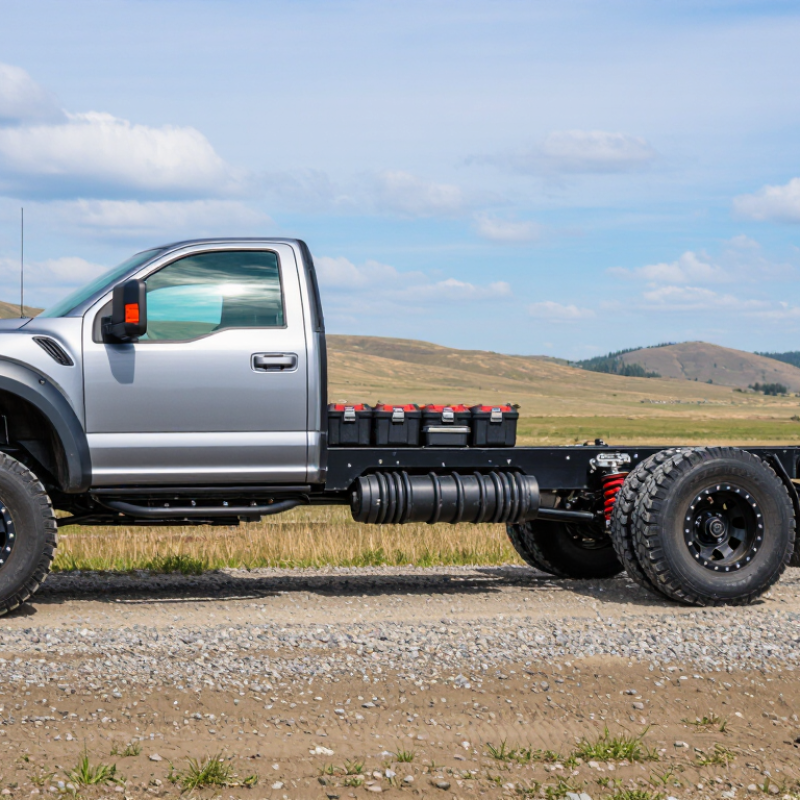
A heavy-duty truck suspension does more than soften bumps. It supports payload, maintains tire contact, and limits body movement on uneven roads. The axle transfers wheel loads toward the frame, while leaf springs flex under weight and help locate the axle. Some systems use air springs, whose pressure can adjust ride height as loads change. Simple in principle.
Shock absorbers control spring movement, reducing repeated bouncing after a pothole or driveway ramp. They do not usually carry the truck’s main load. Bushings cushion connections and allow controlled movement; U-bolts hold the axle and spring assembly together. A stabilizer bar can reduce side-to-side body roll during cornering. Small parts matter.
Each component affects the others. A stiff spring may feel stable with a heavy load, yet send sharper impacts through the cab when the truck is empty. Softer settings can improve comfort but allow more body movement. That trade-off is easy to overlook. Regular inspection for cracked leaves, leaking shocks, loose fasteners, and worn bushings helps reveal problems before handling changes become obvious. Measurements matter, too: uneven ride height can point to a shifted load or tired spring, but it does not identify the cause by itself.
Seven Heavy-Duty Suspension Systems for Trucks
Heavy-duty truck suspensions include multi-leaf springs, parabolic leaf springs, air springs, walking beams, rubber springs, trailing-arm systems, and torsion-bar designs. Multi-leaf packs handle heavy loads with a straightforward mechanical layout. Parabolic leaves reduce weight, while air springs help maintain ride height as loads change. Walking beams suit rough routes and tandem axles. Rubber springs offer compact, low-maintenance support. Trailing arms can improve axle control, and torsion bars appear in some specialized chassis. They are not equally suitable for every truck.
The American Transportation Research Institute’s 2024 Operational Costs report put average truck repair and maintenance costs at 19.8 cents per mile for 2023. That figure covers more than suspension work, but it shows why durability and service access matter. A system that rides smoothly may still be a poor fit if replacement parts are difficult to source. I would compare axle load, road conditions, payload variation, and repair capability before choosing; specifications alone can mislead.
Tips: Inspect spring leaves, air lines, bushings, and mounting points during routine service. Look for uneven tire wear and fresh marks where components have shifted. Match the suspension’s rated capacity to the actual axle load, not just the truck’s advertised payload.
A heavy-duty suspension system must carry more than a brochure number. In real workshop testing, I compare spring rate, axle load, and damping with the truck fully equipped. A useful setup keeps the vehicle level without crushing suspension travel. Too much capacity can create a harsh, nervous ride. That mistake is common. For frequent towing, progressive springs and properly matched dampers usually control weight better than stiff springs alone.
Ride quality depends on more than softness. On broken pavement, good damping prevents repeated bouncing after each impact. The steering should remain calm, while the tires stay planted through quick lane changes. I also inspect bushings, mounting hardware, and alignment after installation. Small movement here can become vague handling later. Still, comfort is subjective, and my preferred setup may feel too firm for another driver. That deserves honesty.
Terrain performance reveals the real trade-off. Longer travel helps tires follow rocks, ruts, and uneven tracks. Adequate clearance protects vulnerable components, but excessive lift can raise the center of gravity. For mud and gravel, controlled articulation matters more than impressive parked height. For heavy loads, stability matters more than maximum flex. Before choosing among seven capable systems, match the suspension to payload, towing frequency, tire size, and daily roads. A professional inspection remains worthwhile, especially when factory geometry changes.
Qualitative comparison of load support, ride comfort, and rough-terrain suitability. Scores use a 1–5 scale, where 5 is the strongest; they are general-purpose assessments, not vehicle-specific test results or load ratings.
Actual capacity and performance depend on the truck, suspension configuration, and component ratings. Shock absorbers control motion but do not independently increase payload capacity.
Choosing a heavy-duty suspension starts with the truck’s actual configuration, not just its model name. A half-ton pickup used for commuting and occasional hauling usually needs a different spring rate from a one-ton work truck carrying tools daily. Three-quarter- and one-ton trucks may also have different rear axle loads, wheelbases, and factory ride heights. Cab-and-chassis trucks need particular care because added bodies can shift weight substantially. Small details matter.
Match the setup to the driving application. Frequent towing calls for stable load support and well-controlled shock movement, while unloaded highway driving still needs a tolerable ride. For gravel roads or uneven work sites, consider suspension travel, ground clearance, and protection from repeated impacts. Check axle ratings, tire clearance, brake lines, and existing modifications before choosing parts. A lift that fits one cab or bed configuration may interfere with another. If the truck carries changing loads, a fixed heavy spring can feel harsh when empty; that trade-off is easy to underestimate. Confirm fitment with measured ride height and the vehicle’s load specifications, then have the installation and alignment checked by a qualified technician.
Choosing a heavy-duty suspension starts with the truck’s actual work, not the tallest lift or stiffest spring. Check the axle ratings, typical cargo weight, towing demands, and road conditions. Measure existing ride height and note tire size before ordering parts. Do not guess. A spring rate that suits a regularly loaded work truck may make an empty truck harsh and unsettled. It is tempting to choose maximum stiffness, but control and comfort both matter.
Match springs, dampers, and other components as a system. A suspension designed for frequent heavy loads may behave poorly when paired with unsuitable shocks. Confirm that parts fit the vehicle and its intended configuration. Follow the vehicle and component manufacturers’ load limits; suspension upgrades do not increase a truck’s rated capacity. This detail is easy to overlook.
After installation, inspect fasteners, bushings, brake hoses, and tire clearance through the suspension’s travel. Use specified torque values and recheck connections after the initial settling period. Look for uneven tire wear, clunks, leaks, or a changed ride height. Check again after settling. Record what you find; a simple note can reveal gradual sag or a recurring loose connection before it becomes a larger repair.
| Suspension System | Best Suited For | Key Advantages | Selection Considerations | Maintenance Checks |
|---|---|---|---|---|
| Multi-Leaf Spring | Work trucks, pickups, and vehicles carrying frequent heavy loads | Simple construction, strong load support, and broad serviceability | Ride can feel firm when the truck is lightly loaded; confirm spring rating and axle compatibility | Inspect leaves for cracks, shifting, corrosion, and damaged center bolts; check U-bolts and bushings for looseness or wear |
| Parabolic Leaf Spring | Commercial and vocational trucks where load support and improved ride are both priorities | Tapered leaves can reduce friction between leaves and help provide a less harsh ride than conventional multi-leaf packs | Confirm the spring is specified for the vehicle’s axle load and intended duty; replacement parts may be less interchangeable | Check spring surfaces for cracks or damage, and inspect mounting brackets, fasteners, and bushings |
| Leaf Spring with Auxiliary Overload Springs | Pickup trucks and service vehicles that carry variable loads or tow regularly | Provides additional support as load increases while retaining the main leaf pack for everyday use | Auxiliary springs generally engage under heavier loads; they do not increase the vehicle’s rated payload or towing limits | Look for contact wear, cracked leaves, loose mounts, and changes in ride height; verify that components are installed as specified |
| Air Suspension | Heavy trucks and some pickups needing adjustable ride height or load-leveling support | Air pressure can be adjusted within the system’s specified range to help maintain ride height under changing loads | Requires compatible controls and air supply; system complexity and repair needs are greater than with a basic leaf setup | Check air springs for cracking or abrasion, inspect airlines and fittings for leaks, and monitor compressor operation and warning indicators |
| Walking Beam Suspension | Heavy vocational trucks operating on rough sites or uneven surfaces | Shares load across tandem axles and allows substantial axle articulation over irregular terrain | Heavy construction suits demanding service but can transmit more vibration than some road-focused systems | Inspect pivot and axle bushings, equalizer components, mounts, and fasteners; investigate unusual noise or uneven tire wear |
| Torsion-Bar Independent Suspension | Selected medium-duty and four-wheel-drive trucks with independent front suspension | Compact layout with adjustable ride height within the vehicle’s specified range | Check the truck’s front-axle rating and intended use; ride-height changes can affect alignment and suspension geometry | Inspect torsion-bar anchors, adjusters, control-arm bushings, and surrounding components for damage or excessive play |
| Heavy-Duty Coil-Spring Suspension | Some pickups and medium-duty trucks that prioritize axle articulation and ride comfort | Coil springs can provide consistent spring action and do not rely on friction between stacked leaves | Load capacity depends on the complete vehicle configuration; verify spring rate, axle rating, and any approved auxiliary support | Check coils for cracks or sagging, and inspect spring seats, control-arm bushings, and related dampers |
Maintenance note: Inspection intervals and service procedures vary by vehicle and operating conditions. Follow the vehicle manufacturer’s schedule, and inspect suspension components sooner after severe off-road use, overloading, impact damage, or noticeable changes in handling or ride height.
Start with axle ratings, typical cargo weight, towing frequency, and daily roads. Measure ride height and check tire size. Do not guess.
Not always. Progressive springs and matched dampers can control frequent loads without making every unloaded drive harsh. A stiff spring alone may reduce comfort.
No. Follow the truck’s stated load limits. An upgrade does not change the vehicle’s rated capacity.
Confirm the exact truck configuration, axle load, cab and bed setup, tire clearance, and existing modifications. Small details matter.
On broken pavement, the truck may keep bouncing after each bump. Watch for vague steering, unsettled lane changes, or tires that feel less planted.
Suspension travel helps tires follow rocks, ruts, and uneven ground. Extra lift can raise the center of gravity. Parked height can be misleading.
Check fasteners, bushings, brake hoses, alignment, and tire clearance through suspension travel. Recheck connections after the system settles. Keep a simple record.
Have a qualified technician check fitment and alignment, especially after changing factory geometry. I may overvalue ride comfort; another driver may prefer a firmer setup.
This guide explores the core components and operating principles of Heavy Duty Suspension For Trucks, including springs, dampers, axles, and mounting systems that work together to support loads and control movement. It compares seven common suspension approaches, explaining how their designs can influence stability, durability, and comfort under demanding conditions.
The overview also considers load capacity, ride quality, and performance across paved roads, uneven surfaces, and work sites. Because no single setup suits every vehicle, it outlines how truck type, payload, driving application, and terrain can guide system selection. Practical maintenance considerations, such as inspecting wear points and keeping components properly aligned, help preserve performance and extend service life.
