Almax Auto Almax Auto

China Top 10 Child Safety Lock Usage Guide for Buyers

Time:2026-10-20 Author:Aria
0%

Choosing a child safety lock is not simply a matter of buying the strongest-looking product. A lock must match the drawer, cabinet, window, appliance, or toilet it protects. This Child Safety Lock Usage Guide introduces ten commonly considered options in China and explains how buyers can assess them carefully.

Dr. Benjamin Hoffman, a pediatrician and injury-prevention specialist, has emphasized, “No safety device replaces active supervision.” That reminder matters in real homes. A toddler may pull a cabinet handle repeatedly, twist a weak adhesive latch, or imitate an older sibling. Good products should resist ordinary force, remain usable for adults, and avoid sharp edges or loose pieces. Installation also matters. A poorly cleaned surface can make a strong lock fail within days.

Test every lock after installation. Pull the cabinet twice. Open and close the door several times. Check the adhesive edge, screw position, release button, and surrounding gap. Small details matter. A lock that works on one cupboard may fail on another.

This guide considers material quality, mounting methods, adult accessibility, cleaning needs, and practical durability. It also recognizes an uncomfortable truth: product descriptions cannot show every household condition. Heat, moisture, dust, and repeated use may change performance. Buyers should read instructions, inspect locks regularly, and replace damaged parts promptly. No guide is perfect. Careful observation remains part of the safety process.
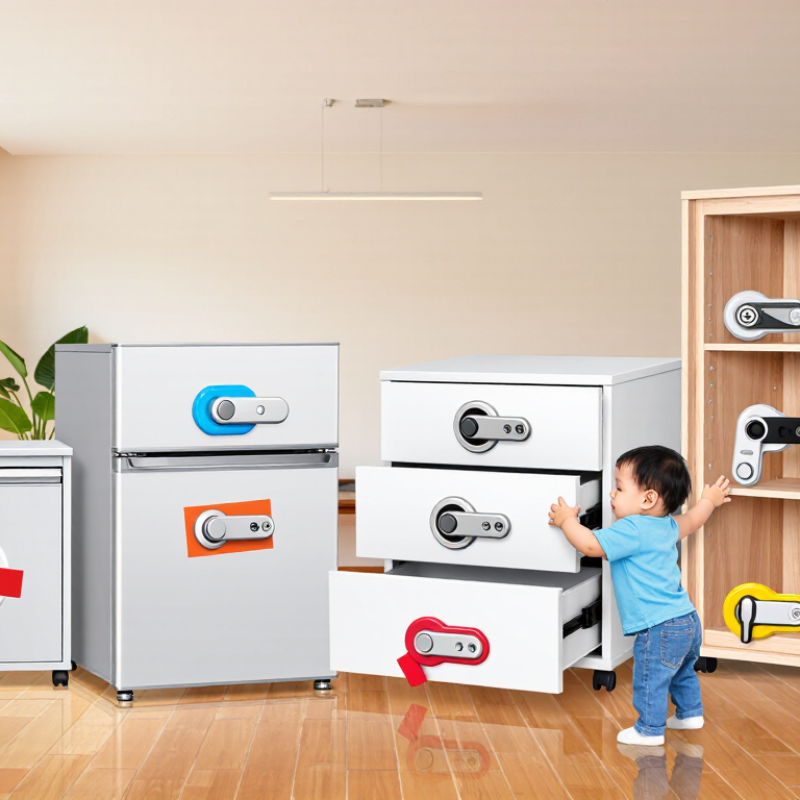
China Top 10 Child Safety Lock Usage Guide for Buyers

Understanding Child Safety Lock Types and Household Applications

China Top 10 Child Safety Lock Usage Guide for Buyers

Understanding Child Safety Lock Types and Household Applications

Child safety locks reduce access to common household hazards. They do not replace active supervision. Choose the lock according to the furniture, opening method, and child’s reach.

Adhesive latches suit smooth cabinets and drawers without drilling. Magnetic locks stay hidden and preserve a clean appearance. Sliding locks work well on paired handles. Strap locks fit refrigerators, toilets, and irregular cabinet shapes. Window restrictors can limit opening distance, but they must match the window structure and ventilation needs.

Fit matters most.

Before buying, measure the gap, handle distance, and surface width. Clean dusty or oily surfaces before applying adhesive parts. Press firmly, then allow the recommended setting time. I have seen a secure-looking latch loosen because it was installed on damp wood. That small mistake is easy to overlook.

Use stronger mechanical fixtures for frequently used doors. Test each lock with gentle pulling after installation. Check whether adults can release it quickly during daily routines. Inspect adhesive, hinges, screws, and plastic bodies every few weeks. Replace damaged parts immediately. A lock may function well in a showroom but fail after repeated opening, heat, or cleaning. Buyers comparing products from China should review material descriptions, load-test information, installation instructions, and quality inspection records. Clear documentation is more reliable than attractive packaging.

Assessing Home Hazards Before Choosing a Safety Lock

Assessing Home Hazards Before Choosing a Safety Lock

A safety lock should match the hazard, not simply the furniture. Walk through each room at a child’s height. Look for reachable drawers, exposed cleaning products, sharp tools, medicines, and loose cords. A cabinet near a sink needs a different lock from a window above a sofa. Measure gaps and handle shapes before buying. Small differences can affect grip strength and installation.

The World Health Organization identifies falls as the second leading cause of unintentional injury deaths worldwide. The U.S. Consumer Product Safety Commission also reported an average of about 6,500 emergency-department-treated pool or spa submersion injuries among children under 15 each year from 2020 to 2022. These figures show why locks must support broader hazard control. A drawer lock cannot prevent climbing. A window lock cannot replace supervision. This is where many buying decisions go wrong.

Tips: Test every lock with one hand before installation. Check whether the adhesive weakens on dusty or damp surfaces. Use screw-mounted hardware for heavy drawers when suitable. Recheck locks monthly. Children grow quickly, and yesterday’s secure cabinet may become tomorrow’s reachable one. Do not forget toilets, refrigerators, balconies, and pet-food containers. I would also photograph each protected area after installation. It makes missed hazards easier to notice, though it is not a perfect inspection method.

Comparing China’s Top 10 Child Safety Locks by Key Features

China’s top 10 child safety locks should be compared by use, not appearance. A practical list includes magnetic cabinet locks, adhesive latches, sliding locks, strap locks, drawer locks, oven locks, refrigerator locks, toilet locks, window locks, and door-handle covers. Each solves a different risk. Magnetic models hide inside cabinets and resist curious fingers. Adhesive latches install quickly, but weak surfaces may reduce their grip. Sliding locks fit handles and drawers, while straps suit irregular furniture.

Key features deserve close inspection. Check the locking strength, release difficulty, adhesive quality, installation space, and adult accessibility. For windows, look for controlled opening rather than a simple blocker. For ovens, heat resistance matters. For bathrooms, water-resistant materials are essential.

The World Health Organization’s World Report on Child Injury Prevention states that unintentional injuries cause nearly 40% of child deaths globally. That figure makes small design details feel less small.

Independent testing is still important. The U.S. Consumer Product Safety Commission recorded thousands of young-child window-fall injuries in recent reporting periods, supporting the need for properly installed window protection. Buyers in China should also examine test documentation, material safety, and clear instructions. A lock that opens with one hand may be convenient, yet overly easy for a three-year-old. Real homes are messy. Adhesive can fail on dusty cabinets, and adults may forget to re-engage a latch. That is the part many product comparisons miss.

Installing and Using Child Safety Locks Correctly

Installing a child safety lock correctly matters more than choosing the most expensive model. Start by identifying real hazards: cleaning products, sharp tools, medicines, windows, and hot appliances. The U.S. Consumer Product Safety Commission reports that window falls injure about 3,300 children under five each year. A correctly fitted lock can reduce access, but it cannot replace supervision.

Clean and dry the surface before installation. Follow the manufacturer’s spacing and screw requirements exactly. Adhesive locks may fail on dusty, oily, painted, or uneven surfaces. For heavy drawers or frequently used cabinets, screw-fixed hardware is usually more dependable. After installation, pull the door firmly and test it from a child’s height. Check again after several days. Small gaps are easy to miss. I have found that adults often test locks gently, while children test them repeatedly.

Tips: Keep locked hazards out of sight, not only out of reach. Inspect locks monthly for loose screws, peeling adhesive, or cracked plastic. Never place furniture beneath an unlocked window. The World Health Organization identifies unintentional injuries as a major threat to children, so each room deserves a practical risk check. A lock is not a promise. It is one layer, and sometimes an imperfect one.

China Top 10 Child Safety Lock Usage Guide for Buyers - Installing and Using Child Safety Locks Correctly
No. Lock Type Best Application Installation Requirements Correct Installation and Use Buyer Checks and Limitations
1 Adhesive Cabinet Lock Cabinet doors, cupboards, and low storage units without suitable handles. Clean, dry, smooth surfaces; allow the adhesive to bond before use. Position the lock out of the child’s reach, press the adhesive firmly, and wait for the period stated in the instructions before testing it. Engage the lock every time the cabinet is closed. Check: Surface compatibility and adhesive condition. Adhesive models may perform poorly on dusty, damp, textured, oily, or painted surfaces.
2 Magnetic Cabinet Lock Drawers and cabinet doors where a concealed appearance is preferred. Requires accurate alignment between the internal lock and the magnetic key position. Install the lock inside the cabinet, verify that the latch fully engages, and store the magnetic key high and out of sight. Test every protected door after installation. Check: Door thickness, cabinet construction, and whether the magnetic key can be kept inaccessible to children.
3 Sliding Cabinet Lock Paired knobs or handles on cabinets, wardrobes, and some refrigerators. Handles or knobs must be close enough for the slider to fit securely. Slide the lock fully into its closed position after each use. Confirm that the device cannot slide off when moderate pressure is applied. Check: Handle spacing and shape. It may not fit recessed, widely spaced, or unusually shaped handles.
4 Adjustable Safety Strap Drawers, cabinets, appliance doors, toilet lids, and selected furniture surfaces. Needs two strong attachment points and a clean, stable mounting surface. Attach both ends securely, adjust the strap so there is minimal slack, and close the release mechanism completely after every use. Caution: Do not use a strap as the only protection for hazardous drawers containing medicines, chemicals, knives, or firearms.
5 Drawer Safety Lock Low drawers containing small objects, tools, sharp items, or household products. Installation may be internal or external, depending on the design; the drawer front must close completely. Install the catch where the drawer cannot be opened far enough for a child to reach the contents. Confirm that the lock re-engages after closing. Check: Drawer gap, front-panel thickness, and whether nearby drawers could be used as climbing steps.
6 Oven and Stove Guard Oven doors and stove controls that are accessible to children. Must tolerate heat in accordance with the product instructions and must not obstruct safe adult operation. Install away from hot surfaces unless the product is specifically rated for that location. Turn control locks on after cooking and keep pan handles turned inward. Caution: A lock does not prevent burns from hot cookware, oven surfaces, steam, or spilled liquids. Supervision remains necessary.
7 Toilet Lid Lock Toilet lids in homes with toddlers who may climb or play near the toilet. Requires a clean, dry lid and bowl surface; the lock must not interfere with normal adult access. Close the lid before engaging the lock, check that it is fully latched, and unlock it before flushing or cleaning when required by the design. Caution: This device is not a substitute for supervision. Keep bathroom doors closed when the room is not in use.
8 Window Restrictor Windows where unrestricted opening could create a fall risk. Must be fitted to a structurally sound frame and used in accordance with local building and fire-safety requirements. Install the restrictor so the window opens only to the intended safe position. Inspect the fasteners and mechanism regularly. Caution: Do not block an essential emergency escape window unless an appropriate compliant alternative is available.
9 Door Lever or Door Knob Cover Rooms that should remain inaccessible, such as bathrooms, utility rooms, or storage areas. Must fit the door hardware securely without preventing adults from opening the door quickly. Install according to the hardware shape, test the release from both sides, and keep the protected room free of hazards that could require urgent access. Check: Compatibility with lever handles, round knobs, door clearance, and emergency access needs.
10 Appliance Door Lock Microwave ovens, dishwashers, washing machines, refrigerators, and other accessible appliance doors. Requires a smooth attachment area and compatibility with the appliance’s heat, moisture, and door movement. Place the lock where it cannot be easily reached, close the door fully before engaging it, and inspect the attachment point for loosening or damage. Caution: Never use a child lock to justify storing medicines, detergents, alcohol, or other dangerous substances within a child’s reach.

Inspecting, Maintaining, and Replacing Safety Locks Over Time

China Top 10 Child Safety Lock Usage Guide for Buyers

Inspecting, Maintaining, and Replacing Safety Locks Over Time

Child safety locks can weaken long before they look broken. Check each lock monthly, especially on drawers, cabinets, windows, and appliances. Look for loose screws, cracked plastic, stretched straps, and peeling adhesive. A latch should close fully without catching or needing unusual force. Test it with firm adult pressure, never with a child nearby.

Clean locks with a soft, slightly damp cloth. Remove crumbs, dust, and sticky residue around the latch. Do not soak mechanical parts or apply oil unless the instructions allow it. For adhesive locks, press the mounting area firmly after cleaning and allow proper setting time. Heat and humidity may reduce adhesion, so inspect bathroom and kitchen locks more often.

Replace any lock that opens unexpectedly, shifts under pressure, or shows visible damage. Replacement is also sensible after repeated failed adjustments. Choose a compatible design and follow the installation instructions carefully. Measure the surface first; a small mismatch can defeat a strong lock. It is easy to trust a lock because it worked yesterday. That assumption needs questioning. Keep dangerous items secured even during inspection, because no safety lock should be treated as the only protection.

FAQS

How should I assess hazards before choosing a home safety lock?

Walk through each room at a child’s height. Check reachable drawers, medicines, cleaners, sharp tools, and loose cords. Look carefully.

Should one lock type protect every cabinet?

No. A sink cabinet may need moisture resistance, while a heavy drawer may need screw-mounted hardware. Furniture shape matters too.

Which lock suits irregular handles or furniture?

Strap locks often fit irregular surfaces. Sliding locks work well on paired handles and some drawers. Measure before buying.

Are adhesive locks reliable on every surface?

No. Dust, moisture, and uneven finishes can weaken adhesive. Clean and dry the surface first, then test the lock repeatedly.

What features matter for window locks?

Choose controlled opening, not only a simple blocker. A window lock cannot replace supervision or prevent every climbing risk.

How can I check whether a lock is practical for adults?

Test it with one hand before installation. Adults should release it reliably, but small children should not open it easily.

Which areas are commonly forgotten during a safety inspection?

Check toilets, refrigerators, balconies, ovens, and pet-food containers. A reachable toilet lid can still create a serious household concern.

How often should installed locks be checked?

Recheck them monthly. Children grow quickly, and yesterday’s secure drawer may become reachable tomorrow. I would photograph protected areas, though photos miss details.

Conclusion

This Child Safety Lock Usage Guide helps buyers choose practical protection for cabinets, drawers, refrigerators, windows, toilets, and other household areas that may contain hazards. It explains the main types of safety locks, including adhesive, magnetic, sliding, strap, and adjustable designs, while showing how to assess risks such as cleaning products, medicines, sharp tools, hot appliances, and accessible windows before making a purchase. By comparing China’s top 10 child safety locks according to strength, installation method, usability, adjustability, material quality, and compatibility, readers can select solutions suited to different rooms and furniture styles.

The guide also emphasizes correct installation and daily use. Locks should be attached to clean, dry surfaces, tested firmly, and positioned beyond a child’s reach whenever possible. Regular inspections can identify loose parts, damaged adhesive, cracks, or reduced locking performance. Cleaning locks properly and replacing worn or unreliable components helps maintain dependable protection as children grow and household needs change.

Aria

Aria

Aria is a dedicated marketing professional with a deep passion for innovative strategies and a keen understanding of our company's product offerings. With a wealth of experience in the industry, Aria excels at crafting engaging content that highlights the unique features and benefits of our......