Almax Auto Almax Auto

Top 10 Tips for Improving Night Driving Visibility

Time:2026-10-15 Author:Henry
0%

Night driving can turn familiar roads into uncertain spaces. Headlights reveal only a narrow tunnel. Rain, fog, dirty windshields, and oncoming glare can shrink that tunnel further. Improving Night Driving Visibility means managing these small weaknesses before they combine. A clean windshield matters. Correctly aimed headlights matter more. Rested eyes matter most.

Dr. John D. Bullough, a respected roadway-lighting researcher, explains, “Good visibility is not simply about more light; it is about the right light in the right place.” His point challenges a common assumption. Brighter lamps do not automatically create safer vision. Poorly aligned beams may produce glare, shadows, or distracting reflections. Effective visibility depends on contrast, timing, distance, and human perception.

This guide, “Top 10 Tips for Improving Night Driving Visibility,” focuses on practical decisions drivers can apply immediately. It examines windshield care, headlight condition, mirror adjustment, speed control, and the effects of fatigue. It also considers how rain changes the road surface. Wet asphalt can reflect headlights like a dark mirror. That detail is easy to underestimate.

Some advice may seem obvious. It is still often ignored. I have noticed that drivers check their headlights, yet forget the glass covering them. Others slow down only after visibility has already deteriorated. That delay deserves reflection. No checklist can remove every nighttime hazard. However, consistent preparation can provide clearer information and more time to respond. Visibility improves through several modest choices, not one dramatic upgrade.
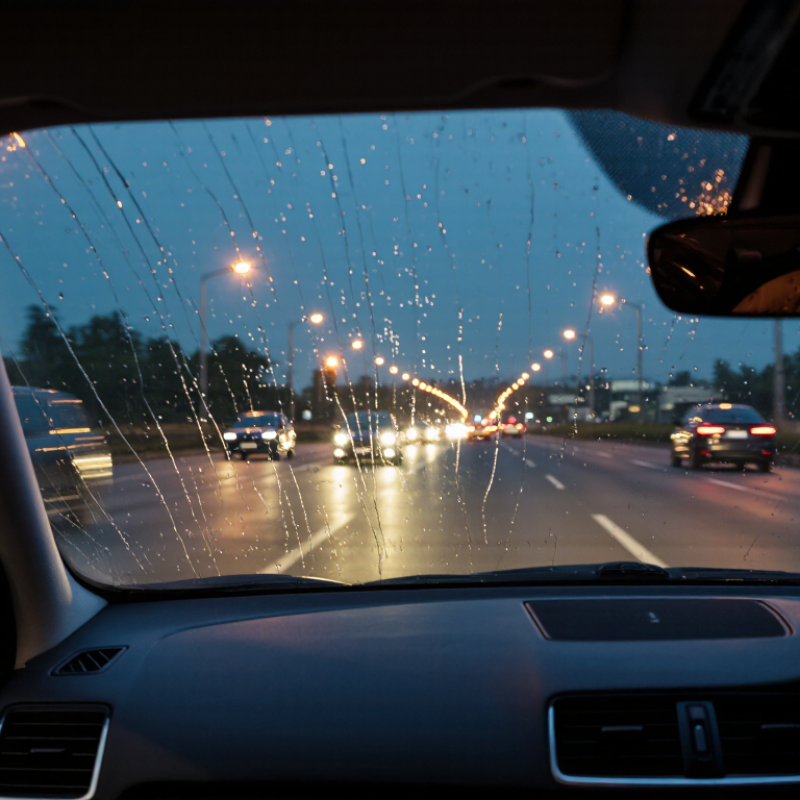
Top 10 Tips for Improving Night Driving Visibility

Assess the Main Causes of Reduced Visibility at Night

Top 10 Tips for Improving Night Driving Visibility

Assessing reduced visibility starts with identifying its real causes. NHTSA’s Traffic Safety Facts reports that about 49% of traffic fatalities occur at night, despite fewer nighttime vehicle miles. Darkness reduces contrast, while glare from oncoming headlights can briefly overwhelm the eyes. Wet roads make this worse by reflecting light like a mirror. Fog, rain, and poorly lit intersections create additional blind areas.

The vehicle itself may also be responsible. Dirty windshields scatter light and produce bright halos around lamps. Clouded headlamp covers, incorrect headlamp alignment, and weak bulbs shorten the useful viewing distance. FHWA guidance emphasizes proper roadway lighting, sign visibility, and retroreflective materials for safer nighttime recognition. Drivers should inspect these details, not simply replace parts when visibility feels poor.

Human factors matter too. The National Highway Traffic Safety Administration identifies fatigue and impaired visual adaptation as important nighttime risks. Older eyes often need more time to adjust after facing bright light. I once blamed poor visibility on the road, then noticed a thin film across the windshield. It was a small fault with a large effect. Still, cleaning glass does not solve every problem. Some drivers keep increasing speed because the road appears familiar, while their stopping distance quietly grows. Regular eye examinations, slower corner entry, clean glass, and correctly adjusted lights provide more reliable control.

Prepare Your Vehicle’s Lighting and Windows Before Driving

Night driving begins before the engine starts. A clean windshield reduces glare from approaching headlights. Wash both sides of the glass, including the inside surface. Dust and oily film can look invisible during daylight. At night, they scatter light across your view. Use a clean microfiber cloth to prevent new streaks. Check the wiper blades for cracks, skipping, or hardened edges. Replace them when they leave narrow water trails. Keep the washer reservoir filled with suitable fluid. Plain water may freeze or clean poorly in cold weather.

Inspect every exterior lamp before leaving. Turn on the low beams, high beams, parking lights, brake lights, and indicators. Walk around the vehicle, or ask someone to confirm the rear lamps. Remove mud, snow, and insects from each lens. A lamp can work while pointing too high or too low. Uneven aim may reduce your view or trouble other drivers. If the beam pattern looks unusual, arrange a professional alignment check. I once ignored a dim rear light for several weeks. That small oversight changed how carefully I inspect lights now.

Inside the vehicle, test the defroster and climate controls. Condensation can return quickly on a cold evening. Set mirrors after the glass clears, not before. Reduce dashboard brightness if reflections appear on the windshield. Avoid hanging objects that block corners of the view. I sometimes rush this preparation when I am late. That is exactly when skipped checks become costly. Keep a soft cloth in the car, because windows rarely stay perfect.

Use Headlights Correctly in Different Nighttime Conditions

Top 10 Tips for Improving Night Driving Visibility

Use Headlights Correctly in Different Nighttime Conditions

Correct headlight use begins before the road becomes completely dark. Turn on low beams at dusk, during rain, and whenever visibility drops. Automatic settings can help, but they are not perfect. I still check the dashboard symbol manually.

NHTSA reports that the nighttime fatality rate is about three times higher than during daylight. Glare, fatigue, and limited contrast all make hazards harder to detect. On wet roads, low beams usually reduce reflected glare better than high beams. Keep them aimed properly, because a misaligned beam can illuminate the sky instead of the lane.

Use high beams only on dark, open roads without nearby traffic. Switch to low beams before approaching another vehicle or cresting a hill. IIHS notes that high beams can reveal objects at roughly 500 feet, while low beams may reach only about 160 feet. At 55 mph, that difference matters. A pedestrian in dark clothing may appear suddenly.

Keep headlights, windshields, and mirrors clean. Even a thin film can scatter light into your eyes. Never stare at approaching lamps; look toward the right lane edge instead. This takes practice. I sometimes react too late when glare is intense, which is a reminder to reduce speed, not simply increase brightness.

Top 10 Tips for Improving Night Driving Visibility

Use Headlights Correctly in Different Nighttime Conditions

The chart summarizes generally recommended headlight choices for common nighttime situations. A value of 1 means the setting is normally appropriate; 0 means it should normally be avoided. Always follow local traffic laws and vehicle-manufacturer instructions.

10 Practical Visibility Tips

  1. Use low-beam headlights whenever another vehicle is approaching or driving ahead.
  2. Use high beams only on sufficiently dark roads when they will not dazzle other road users.
  3. Switch from high beams to low beams before meeting oncoming traffic.
  4. Keep headlights, tail lights, mirrors, and windows clean.
  5. Do not use high beams in fog, heavy rain, or falling snow because reflected light can reduce visibility.
  6. Use front fog lamps only when visibility is seriously reduced and when permitted by local law.
  7. Check that headlights are correctly aimed and have not been altered by a heavy load.
  8. Reduce speed when visibility or road surface conditions deteriorate.
  9. Dim dashboard and interior lighting to reduce reflections on the windshield.
  10. Replace damaged or noticeably dim bulbs and inspect exterior lights regularly.

Improve Visual Awareness on Dark and Busy Roads

Top 10 Tips for Improving Night Driving Visibility

Dark roads demand more than bright headlights. They require deliberate visual habits. The National Highway Traffic Safety Administration’s 2022 Traffic Safety Facts reports that about 49% of passenger-vehicle occupant deaths occurred in nighttime crashes, despite fewer trips after dark. Reduced contrast, glare, fatigue, and wet pavement can quickly hide a cyclist, animal, or stopped vehicle. Keep the windshield clean inside and outside. Replace damaged wiper blades. Check headlight alignment, then use high beams only when traffic allows. Look beyond the road edge, not just at the lane center. Your eyes need time to detect movement.

Slow down before a bend or crowded junction. Leave extra space behind vehicles, because glare can erase brake-light detail. Avoid staring into approaching headlights; shift your gaze toward the right road edge. Scan mirrors regularly. Dim dashboard lighting can preserve contrast, though I sometimes set it too low and miss useful information. That is a reminder to check, not guess. The Federal Highway Administration identifies poor visibility as a major factor in nighttime safety. Its roadway guidance emphasizes lighting consistency, clear markings, and contrast. Drivers should also reduce speed in rain, fog, or unfamiliar areas. A clean lens helps, but it cannot overcome tired eyes. The American Automobile Association Foundation has linked fatigue with impaired attention and slower reactions. Take a break when signs begin to blur. Stop safely. Five quiet minutes may prevent one serious mistake.

Adjust Speed and Driving Habits for Safer Night Travel

Top 10 Tips for Improving Night Driving Visibility

Adjust Speed and Driving Habits for Safer Night Travel

Night driving demands more than bright headlights. It requires slower decisions and wider attention. I have learned that familiar roads can look completely different after sunset. Reduce speed when visibility drops, especially near bends, crossings, and parked vehicles. Your stopping distance grows when glare, rain, or darkness hides hazards. Leave extra space between your vehicle and the one ahead. Avoid following too closely. Tip 1: Drive at a speed that lets you stop within the area you can clearly see.

Fatigue can quietly weaken judgment. A short trip may still become risky when your eyes feel dry or heavy. Take a proper break before continuing, and do not rely on loud music or open windows to stay alert. Keep your windshield clean inside and outside, because oily film can scatter light from approaching traffic. Dim dashboard lighting when possible. It helps your eyes adjust to the road. Tip 2: If your vision feels strained, pause somewhere safe instead of pushing through.

Bright headlights can create a brief white wall. Look toward the right edge of your lane, not directly at the glare, while keeping your vehicle steady. On narrow roads, slow down early for bicycles, pedestrians, animals, and unlit obstacles. I sometimes misjudge how quickly darkness hides movement, so I treat every shadow cautiously. Good habits are not dramatic. They are repeated, practical choices. Tip 3: Scan farther ahead, reduce speed early, and expect the unexpected.

FAQS

When should low-beam headlights be used?

Turn them on at dusk, in rain, or whenever visibility drops. Check the dashboard symbol manually. Automatic settings can miss changing conditions.

When are high beams appropriate?

Use them on dark, open roads without nearby traffic. Switch to low beams before approaching vehicles or hills. Be considerate.

How far can headlights help me see?

High beams may reveal objects roughly 500 feet ahead. Low beams may reach about 160 feet. At highway speed, that difference matters.

How can I reduce glare from wet roads and approaching headlights?

Keep headlights, mirrors, and the windshield clean. Look toward the right lane edge, not directly at lamps. Slow down when glare forms a white wall.

How fast should I drive at night?

Choose a speed that lets you stop within the area you can clearly see. Reduce speed near bends, crossings, parked vehicles, and unfamiliar roads. Not always easy.

What should I do when I feel tired?

Stop safely when signs blur, eyes feel heavy, or attention wanders. Take a real break. Loud music is not a reliable fix.

How should I scan dark roads?

Look beyond the lane center and check road edges for movement. Scan mirrors regularly. Watch for cyclists, pedestrians, animals, and stopped vehicles.

Which vehicle checks improve night visibility?

Clean the windshield inside and outside. Replace damaged wipers and check headlight alignment. A clean lens helps, but tired eyes still limit safety.

Conclusion

Improving Night Driving Visibility starts with understanding why darkness makes driving more difficult. Glare from oncoming headlights, dirty windshields, fog, rain, weak bulbs, and poorly adjusted mirrors can all reduce what you see. Before setting out, clean the windshield, windows, mirrors, and headlight covers, then check that all exterior lights work properly. Adjust the dashboard brightness and seating position so reflections do not distract you.

Use low beams in normal nighttime traffic and switch to high beams only when conditions and surrounding vehicles allow, returning to low beams for oncoming traffic or vehicles ahead. On dark or busy roads, scan farther ahead, watch road edges and reflective signs, and avoid staring directly at bright lights. Reduce speed when visibility is limited, increase following distance, and make smooth, deliberate movements. Taking regular breaks can also help prevent eye strain and fatigue, making every nighttime journey safer and more controlled.

Henry

Henry

Henry is a dedicated marketing professional with a profound expertise in the company's offerings. With years of experience in the industry, he possesses an impressive understanding of the market dynamics and consumer behaviors that drive success. Henry is committed to sharing his insights through......